 4.8 OUT OF 5
 Jesse Enkelaar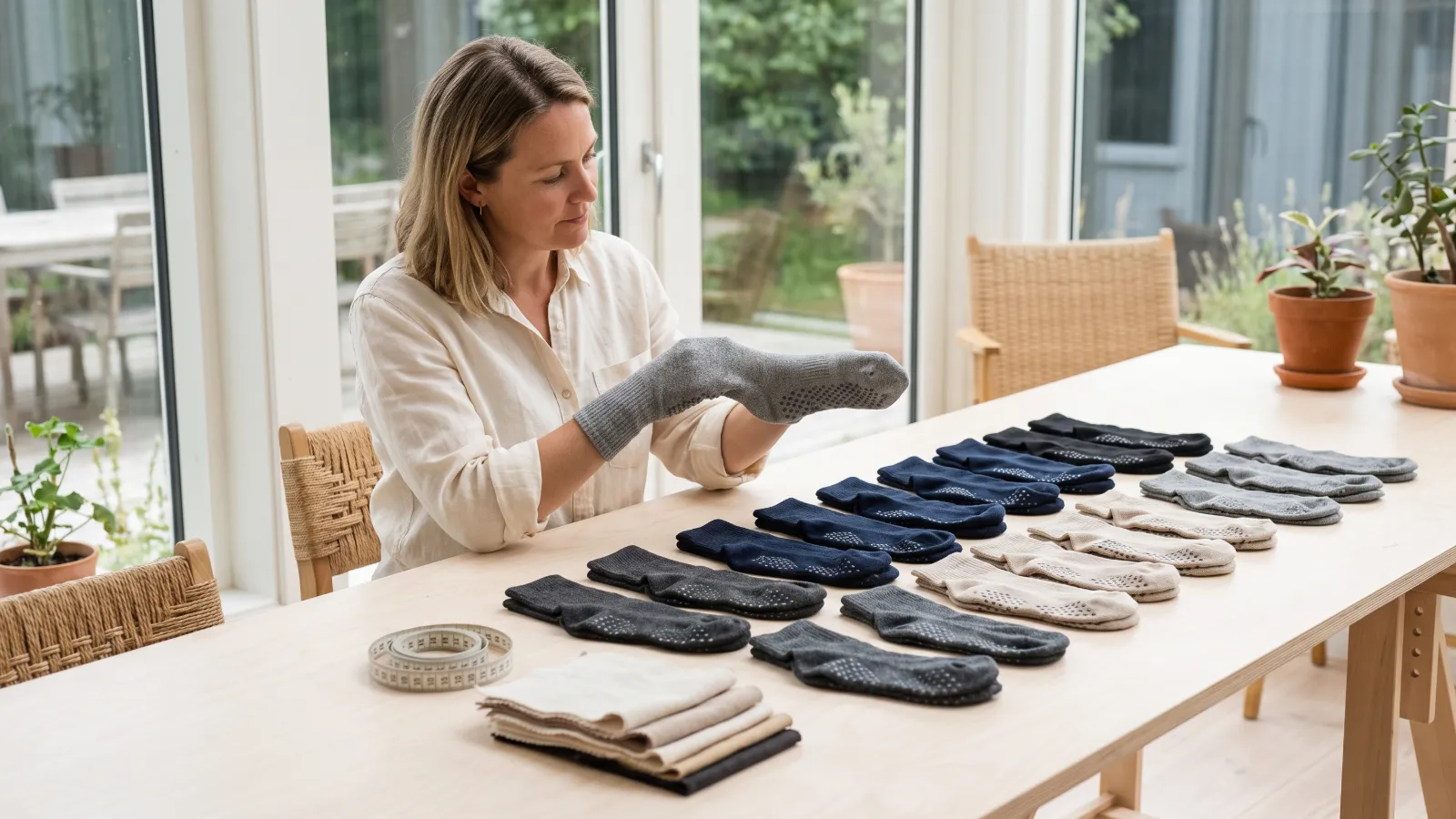
The most common quality problems with grip socks ordered direct from a factory are grip that peels or flattens, sizing that drifts from pair to pair, colors that arrive a shade off, thin or low-grade yarn, and logos that reproduce poorly. Without anyone checking the goods on site, you often discover these only after the full batch has arrived and been paid for.
Quality is the risk that never shows up in a quote, and it hurts your brand more directly than any other, because members feel it on their feet in every class. A low price per pair means very little if part of the batch cannot be sold or handed out with confidence.
This guide is for studio owners and managers who are weighing a direct factory order. It covers each failure, why it happens, how to test for it before you commit, and what good looks like. For payment terms, recourse and the other non-quality risks, see our overview of the risks of ordering grip socks direct from China.
Why quality problems show up so late on a direct order
On a direct order, the chain is short: you approve a sample, the factory produces the run, and the cartons are shipped to you. Nobody in between is responsible for checking that the bulk matches the sample. That is the core issue, not that factories are careless by default.
Some defects are visible the moment you open a carton, such as a wrong color or a blurred logo. Others only appear after weeks of use and washing, when the socks are already with your members. By then the money has been paid, and a reprint means waiting through another full production and shipping cycle. If you want to know what that cycle looks like, our article on the lead time for custom grip socks from China breaks it down stage by stage.
Grip that peels, cracks or flattens
The grip is the whole point of the sock, and it is usually the first thing to fail on a cheap run. Silicone or rubber that is applied too thin, cured poorly or rushed through production will peel, crack or flatten after a few washes. On day one it looks perfect. The failure shows up weeks later, in your members' laundry, which is the worst possible place to discover it.
When you inspect samples and the first cartons, look for these signs:
- Uneven coverage. Some dots or shapes look full and raised, others thin or patchy. Uneven application usually means uneven wear.
- Lifting edges after washing. If the edges of the grip start to curl after a handful of washes, the bond with the fabric is weak.
- Loss of tack. Grip that feels slippery or flattened after washing no longer does its job on a reformer or mat, which turns a branding item into a safety issue.
Sizing that drifts across the run
Grip socks are often sold in size bands, and a good factory holds those bands consistently across the whole run. A weaker one lets sizing drift, so a "medium" varies from pair to pair. Members who get a sock that does not fit blame your studio, not the factory.
Fit also matters for safety. A sock that is too loose twists on the foot and moves the grip away from where it should be, which undermines the very benefit the member bought it for. Check several pairs from each size band, not just one, and compare foot length, heel position and cuff tension against the agreed specification.
Colors that arrive a shade off
Colors that look right on screen can arrive a shade out, especially subtle or brand-specific tones such as soft pinks, sage greens or warm neutrals. Without a physical proof matched to a color standard, you are trusting the factory's interpretation of a screen color.
For a studio whose socks carry its brand colors, an off shade is a visible, repeated miss every time a member looks down. Give the factory exact color references, and compare the sample to your brand reference in daylight, not under warm indoor lighting. If your colors are not documented yet, a simple brand style guide template makes this step much easier for any supplier.
Thin or low-grade yarn
Yarn quality is easy to hide in a photo and obvious on the foot. Cheaper socks use lower yarn counts and thinner knits that feel flimsy and wear out fast. Better socks use finer yarn and a denser knit. Specifications like a yarn count of around 30/1 or higher and a needle count in the region of 168 to 200 are markers of a better sock.
A listing rarely volunteers these numbers, so ask for them in writing and then verify them in the sample. Practical checks help too: stretch the sock over a heel and see whether the knit turns see-through, check whether it springs back after stretching, and compare the weight and feel against a sock you already trust.
Logos that blur or lose detail
A logo built from a weak file, or pushed past the color and size limits of knitting, reproduces badly. Thin lines disappear, small text fills in and colors bleed into each other. On a direct order, nobody upstream is responsible for catching this before production, so the problem reaches the full batch.
Send vector artwork, keep the number of colors limited, and review the logo at its real size on the sock, not on a zoomed-in screen. If you also want your logo in the grip on the sole, that brings its own constraints, which we cover in our article on putting your studio logo on the grip.
How to test a sample before you commit to a bulk order
The sample is your one real chance to catch problems while they are still cheap to fix. Treat it as a test, not a formality:
- Ask for a sample from the actual production line, not a showroom piece made separately.
- Wash it several times, the way members will, and inspect the grip after each wash.
- Measure sizing against the agreed specification for each size band.
- Compare colors to your brand reference in daylight.
- Feel the yarn, stretch it over a heel, and ask for the yarn and needle counts in writing.
- Check the logo at actual size from a few feet away, where members will see it.
- If you order direct, consider a paid pre-shipment inspection, so problems are caught before the batch leaves China rather than after it reaches you.
Use the table below as a quick reference while you check:
| Attribute | Warning sign | Good sign |
|---|---|---|
| Grip | Peels, lifts or flattens after washing | Bonded and intact after repeated washes |
| Sizing | Drifts from pair to pair | Consistent within each size band |
| Color | Off-shade compared with your brand | Matched to a color standard |
| Yarn | Thin, flimsy, see-through when stretched | Around 30/1 or finer, needle count around 168 to 200 |
| Logo | Blurred lines, filled-in text, wrong colors | Clean, made from vector artwork, correct palette |
Who carries the quality risk, and what to do next
The failures that hurt most are the ones you cannot see in a photo and only meet after the batch arrives. When you order direct, those failures are yours to find and yours to pay for. That is the honest trade-off behind a lower factory price.
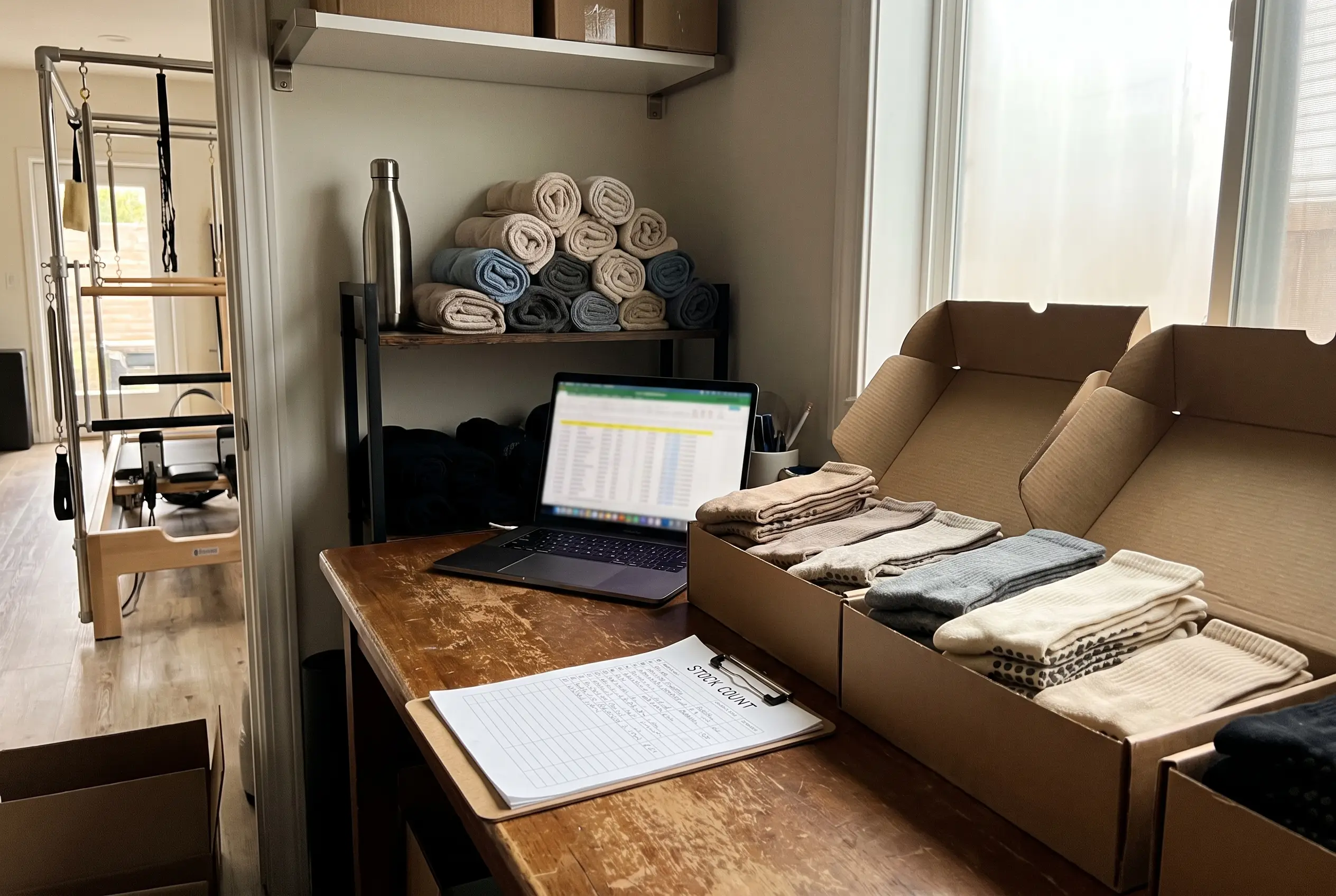
A specialist supplier takes this whole category of risk off your plate. As a custom sock manufacturer for studios, PilatesGoods works with long-term factory partners in China and handles the design files, sampling and quality checks before anything ships, and the quantity you order is the quantity delivered. Whichever route you choose, keep this short checklist in hand:
- Get a production sample and wash-test it before you pay for the run.
- Put yarn count, needle count, sizing and color references in writing.
- Decide who inspects the goods before they ship, and who pays if they fail.
If you want to see how your logo and colors translate onto a sock before deciding anything, you can start your design and receive a free mockup within 24 hours on business days, with no obligation.