 5.0 out of 5
 Jesse Enkelaar
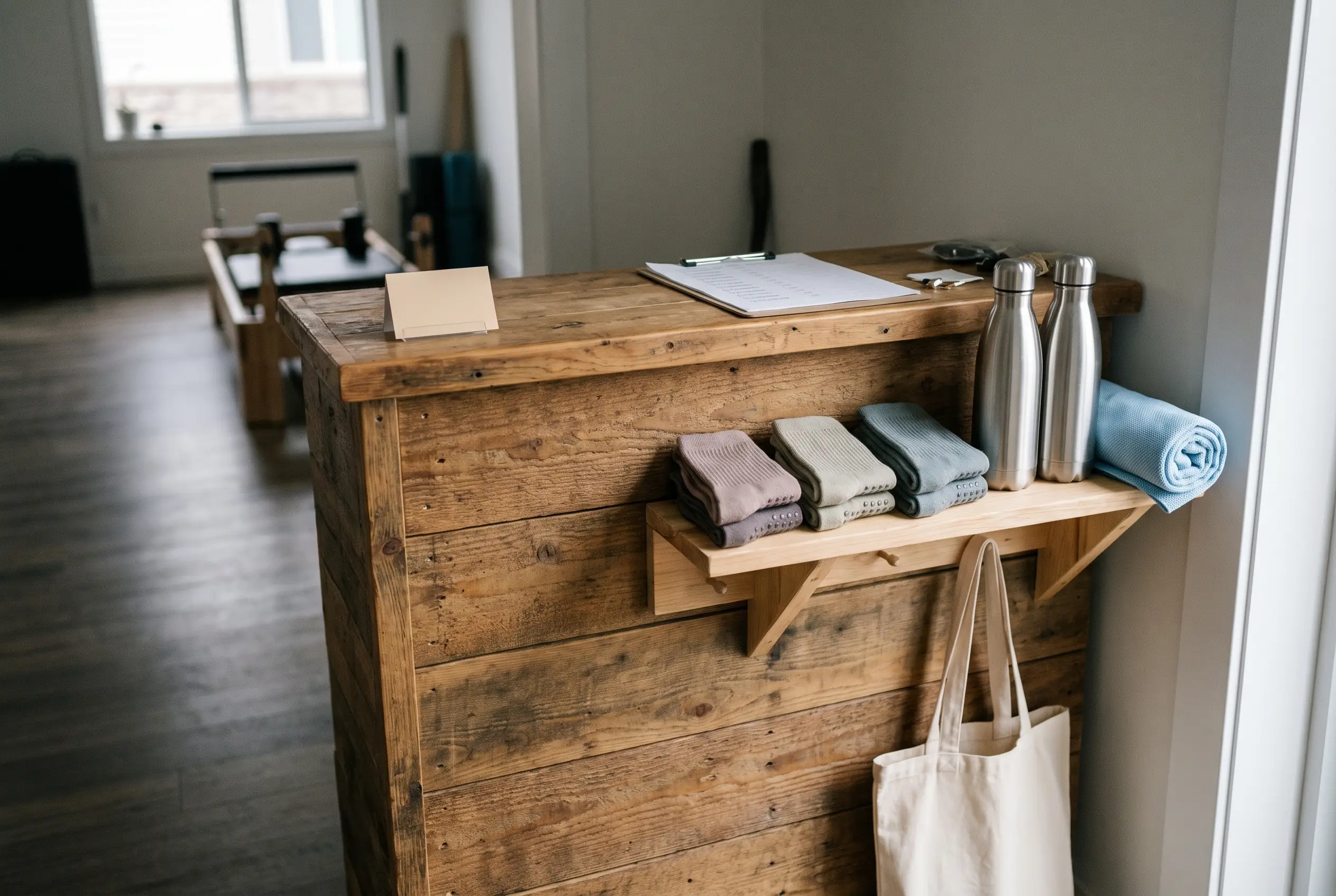
The best studio merch displays usually work because of placement, not size. One clear focal product at check-in, a couple of easy add-ons near reception, and pricing people can scan in seconds will often do more than a large retail wall ever could.
In most Pilates spaces, a curated setup converts better than a crowded one. Members expect a calm, premium environment, so the display should feel like part of the studio experience. If you are starting small, practical low-space Pilates and yoga products such as custom grip socks and a few compact accessories are usually the easiest items to test first.
Start with the moments when clients naturally pause
Studio merch rarely sells because someone went looking for a shop. It usually sells in the pauses already built into the visit: check-in, waiting for class to start, chatting after a session, or packing up to leave. When the display sits inside that natural flow, it feels convenient instead of salesy. Staff can mention an item in a normal conversation, and members can make a quick decision without stepping away from their routine.
That is why a small, edited assortment usually works better than a wide range. Pilates clients tend to respond well to a calm, premium setup, and too much choice slows people down. A few useful products that support class and reflect the studio brand can do double duty: they help members in the moment and keep the studio visible when people use them later in daily life. Most studios do not need a full retail buildout to start. A shelf, tray, or compact counter display is often easier to maintain and easier for staff to sell.
Use the studio zones that already do the selling
For most Pilates studio merch display ideas, the best move is to use the zones you already have instead of creating a separate retail area.
| Studio zone | Best merch fit | Why it works |
|---|---|---|
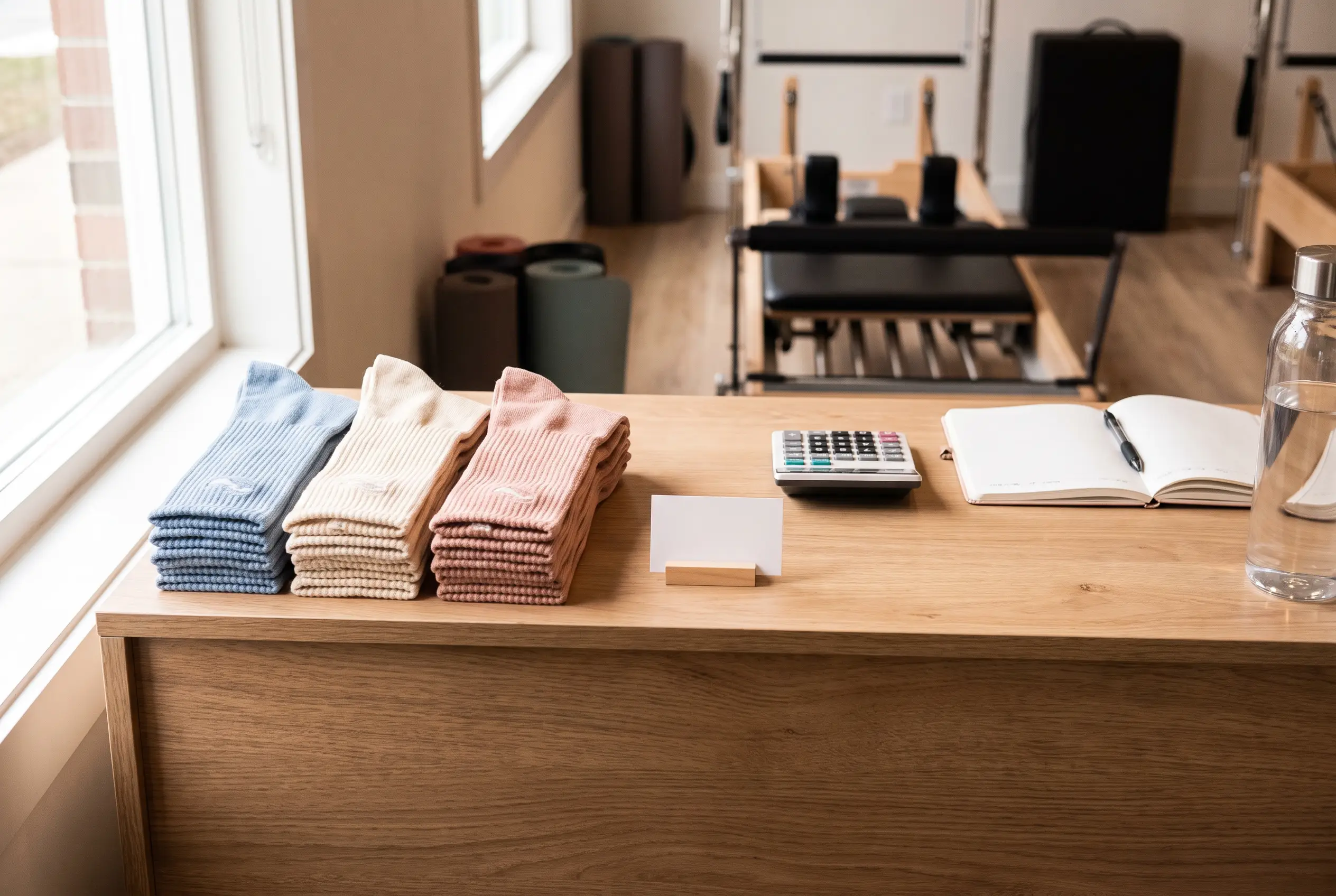
| Front desk | One focal item, such as grip socks | Everyone sees it at check-in, and staff can point it out quickly. Keep it compact and easy to restock. |
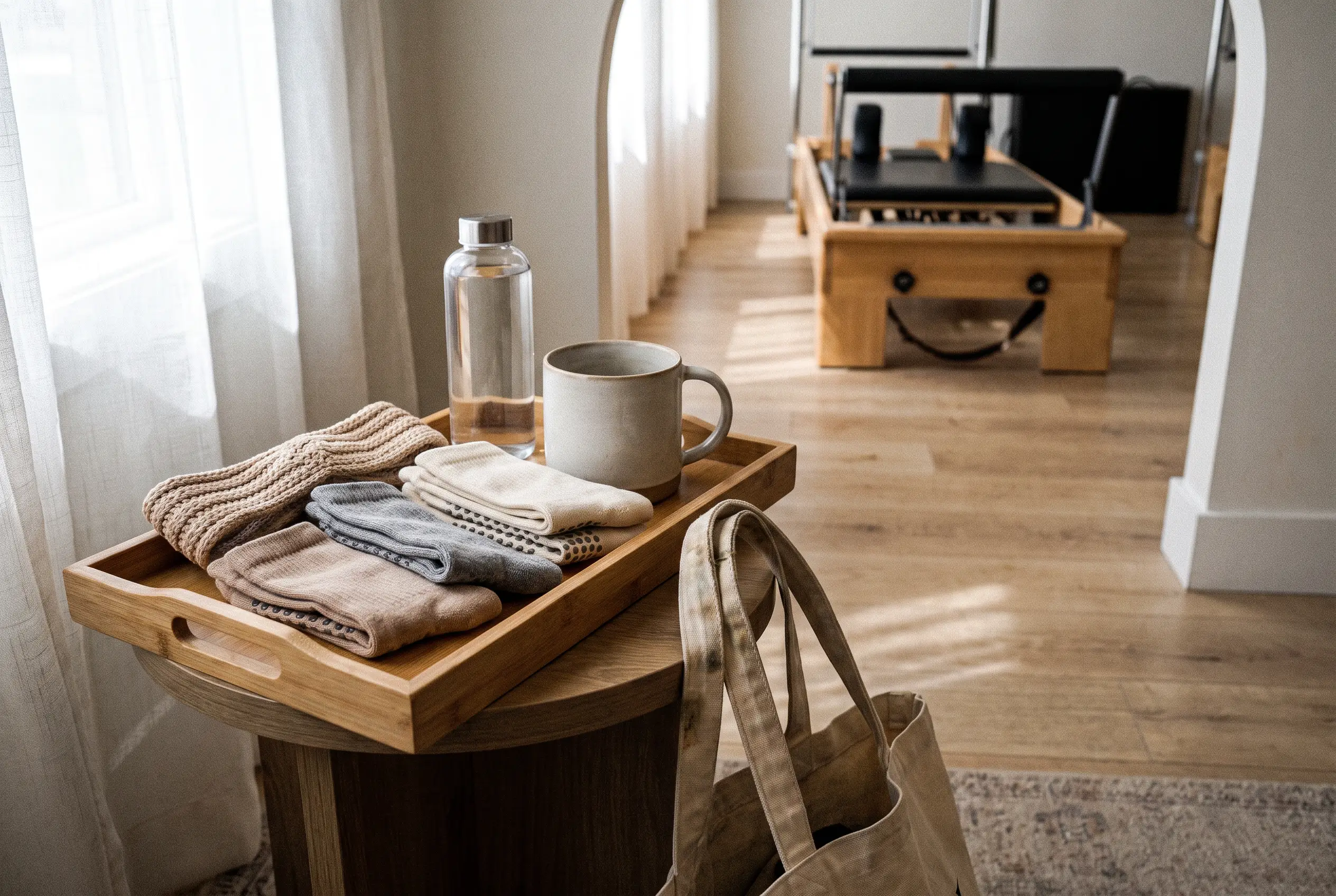
| Waiting area | A small edited selection of easy add-ons | Clients can browse while they wait. Use a tidy stand or tray that does not block traffic. |
| Checkout or exit | Lowest-friction impulse items | Good for last-minute yeses. Make pricing obvious and keep choices limited. |
| Workshop table | Themed items linked to events or challenges | Context helps products feel timely. Reset the table once the event passes. |
| Digital follow-up | QR code or link in booking emails | Lets members buy later without needing a sales conversation in the studio. |
Pick merch people can say yes to quickly
If you want faster decisions, choose products that feel useful straight away and do not create much fitting, storage, or price hesitation.
- Start with custom studio logo grip socks. They are compact, easy to display, simple to stack behind reception, and closely tied to the studio routine. If you want to test a branded first run without going too big, PilatesGoods offers standard custom sock programs starting at 50 pairs.
- Add only one or two low-space extras beside them. Some of the best-selling Pilates accessories like water bottles, headbands, microfibre towels, or reformer grip towels are easy to understand and easy to buy without a lot of comparison.
- Keep sizing simple. One-size products or items with broad sizing are easier to manage than categories that need fitting help, deeper stock, or lots of back-up sizes.
- Watch the price point. The easiest display products are the ones a member can add to today’s class spend without needing a long think or a staff consult.
- Choose items that suit your storage reality. If extra stock cannot live neatly behind the desk or in a small cupboard, the display becomes harder to keep full and tidy.
- Leave room for giftable pieces. Socks, towels, bottles, and other compact accessories work well when someone wants a practical Pilates-related gift but does not know exact preferences or sizes.
Keep the setup calm, premium, and easy to shop
The best merch displays feel like a natural extension of the studio, not a separate pop-up shop.
- Use restrained branding. Keep logos, colours, and packaging in line with the studio identity so the display feels considered rather than loud.
- Limit the palette. Neutral tones or a tight colour story make even a small setup look polished and help one hero product stand out.
- Keep typography clean and signage short. Each sign should do one job only: show the price, explain the product, or highlight a simple pairing.
- Prioritise quality over SKU count. Durable, well-finished products usually fit Pilates expectations better than a larger assortment that feels random or disposable.
- If you use short phrases on tags or signs, keep them calm and wearable. Lines like “Move with control”, “Studio time”, or “Find your flow” tend to feel more on-brand than novelty slogans.
Refresh the display with small drops and simple themes
You do not need entirely new products every month to keep attention on the merch area. Often, the core range stays the same while the presentation changes. A new-member offer, workshop tie-in, challenge month, milestone celebration, seasonal gifting moment, or limited colour drop can all make familiar products feel fresh again. Even a small update gives regular members a reason to look twice.
It also helps to connect each refresh to the other places members already interact with your brand. Show the same item in booking emails, place a QR code beside the display, let instructors use it in class, and mention it in social content around the same time. To keep stock risk low, start with smaller first runs, keep proven core items available, and only scale what actually gets reordered. If you are planning custom merch design, leave enough time for production and delivery before the workshop, campaign, or seasonal push begins.
Avoid the little retail habits that quietly kill sales
Most underperforming merch corners are suffering from small operational issues, not a lack of demand.
- Do not overload the display. Too much choice, cluttered surfaces, and unclear pricing make quick add-on decisions harder.
- Count the hidden costs. Fixtures, storage, checkout flow, staff upkeep time, and slow-moving inventory all affect whether the setup is really working.
- Build in a quick weekly check. Tidy the area, refill bestsellers, remove stale items, and make sure every product is still clearly priced.
- Track four simple numbers: sell-through, repeat purchases, add-on rate, and stock age. They tell you what stays, what moves, and what should be dropped.