 5.0 out of 5
 Jesse Enkelaar

Price grip socks from your full landed cost per pair, not from the supplier quote alone. A pair that looks cheap at first can become much less attractive once freight, duties or VAT, packaging, and fees are added in. The upside is that grip socks often support healthy studio margins, much like other best-selling yoga and pilates accessories: they are commonly bought right before class, repurchased over time, and often seen as part of the studio experience. The right price comes from four things working together: your real cost, your studio positioning, your sourcing choice, and how tightly you manage stock.
Start with your true landed cost per pair
Your retail price should start with one simple calculation: total cost to get sellable pairs onto your shelf, divided by the number of sellable pairs.
- The unit cost from the supplier.
- Freight or shipping from the factory or wholesaler.
- Duties, VAT, or other import taxes you actually carry.
- Packaging, labels, inserts, or retail presentation costs.
- Sample costs, strike-offs, or artwork-related setup tied to the run.
- Payment fees, customs brokerage, and other import-related charges.
Then look at the minimum order for custom grip socks and your opening order size. On custom runs, setup and sample costs are spread across the first batch, so small runs can have a higher effective cost per pair. A low supplier quote is not automatically a good deal if the opening order is too large, ties up cash, or is slow and awkward to reorder.
Turn that cost into a retail price that feels right
Use your landed cost as the base, then choose a retail price that leaves enough gross profit per pair. The examples below use USD for simplicity, but the same logic works in any currency.
| Landed cost per pair | Example retail price | Gross profit per pair | Gross margin |
|---|---|---|---|
| $4.50 | $13 | $8.50 | 65% |
| $5.50 | $15 | $9.50 | 63% |
| $7.00 | $18 | $11.00 | 61% |
| $8.50 | $21 | $12.50 | 60% |
| $10.50 | $24 | $13.50 | 56% |
These are examples, not fixed rules. Member pricing, intro packs, or class bundles can work well if they stay controlled: think a modest member benefit or a first-class bundle that includes one pair. Keep the full retail price as the normal anchor so clients do not learn to wait for a discount.
Price the experience, not just the sock itself
Studios can usually charge more for grip socks than a general retailer because the buying moment is different. A member is not casually browsing online with ten tabs open and plenty of time to compare. They are often buying at the point of need: they forgot their pair, they are new to class, or they want an extra pair that feels right for the sessions they already attend. In many studios, grip socks are part of the class requirement or expectation, which makes the purchase feel practical rather than optional. That convenience carries value, and clients are often willing to pay for it when the product feels dependable.
That said, a higher studio price still has to feel justified. Members notice quality quickly. They can tell when the grip coverage feels minimal, when the fabric is thin, when the sock slips around the foot, or when the toe seam feels bulky. They also notice the opposite: solid grip placement, comfortable fabric, a secure fit, softer seams, better wash durability, and packaging that feels clean and branded instead of generic. None of those details need to be luxury-level to support a better price, but they do need to feel considered. A sock that looks good on display but disappoints after two washes will create price resistance fast. A sock that feels consistent and studio-worthy is much easier to sell again and again.
This is why it helps to decide what role the sock plays in your retail mix before you pick the number. A basic emergency pair is there to solve a last-minute problem. It should be simple, reliable, and priced accessibly enough that a first-time buyer does not hesitate. An everyday studio sock is different. This is your core retail product: the pair members buy because they liked the first one and want another. It should feel comfortable, wash well, and give you steady margin at regular volume. Then there is the more premium branded option. This is where custom colors, a clear studio logo on grip socks, better finishing, and more polished packaging can lift perceived value. If it looks unmistakably like your studio rather than a generic sock with a logo added as an afterthought, clients will usually accept a higher retail price.
So when someone asks, “Why are grippy socks so expensive?”, the practical answer is that they are not priced like a commodity in a supermarket aisle. They are often sold in a moment of immediate need, inside a trusted studio environment, with quality and branding doing part of the work. Price too low, and you give away margin on a product that can support it. Price too high without the quality or presentation to back it up, and sales slow down. The sweet spot is where the product, the setting, and the member expectation all line up.
Custom or wholesale? Decide that before you set the number
Wholesale and custom sourcing create very different pricing realities. Wholesale usually wins on simplicity: lower upfront spend, faster setup, and easier cost visibility. You choose a ready-made style, buy in, and start selling. The trade-off is that the product is easier to compare with what members may see elsewhere, so your pricing room can be narrower.
Custom grip socks ask for more planning. MOQ, sampling, artwork approval, freight, and lead times all affect your true cost, especially when you factor in the cost to import custom socks from China. But custom can also give you more pricing flexibility because the product feels specific to your studio rather than interchangeable. If the design looks on-brand and the quality holds up, a custom pair can often support a stronger retail price and a stronger retail story.
Do the math before you lock in the shelf price. Get a full quote or wholesale grip socks price list, confirm minimums, ask how samples work, and understand any import or timing implications. For example, PilatesGoods publicly states standard custom sock minimums starting at 50 pairs and offers free custom mockups, which can make it easier to model a first custom run before you commit.
Protect your margin after launch
- Start with a tight assortment. One or two core colors, one main height, and one hero design usually outperform a wide opening range that splits demand and ties up cash.
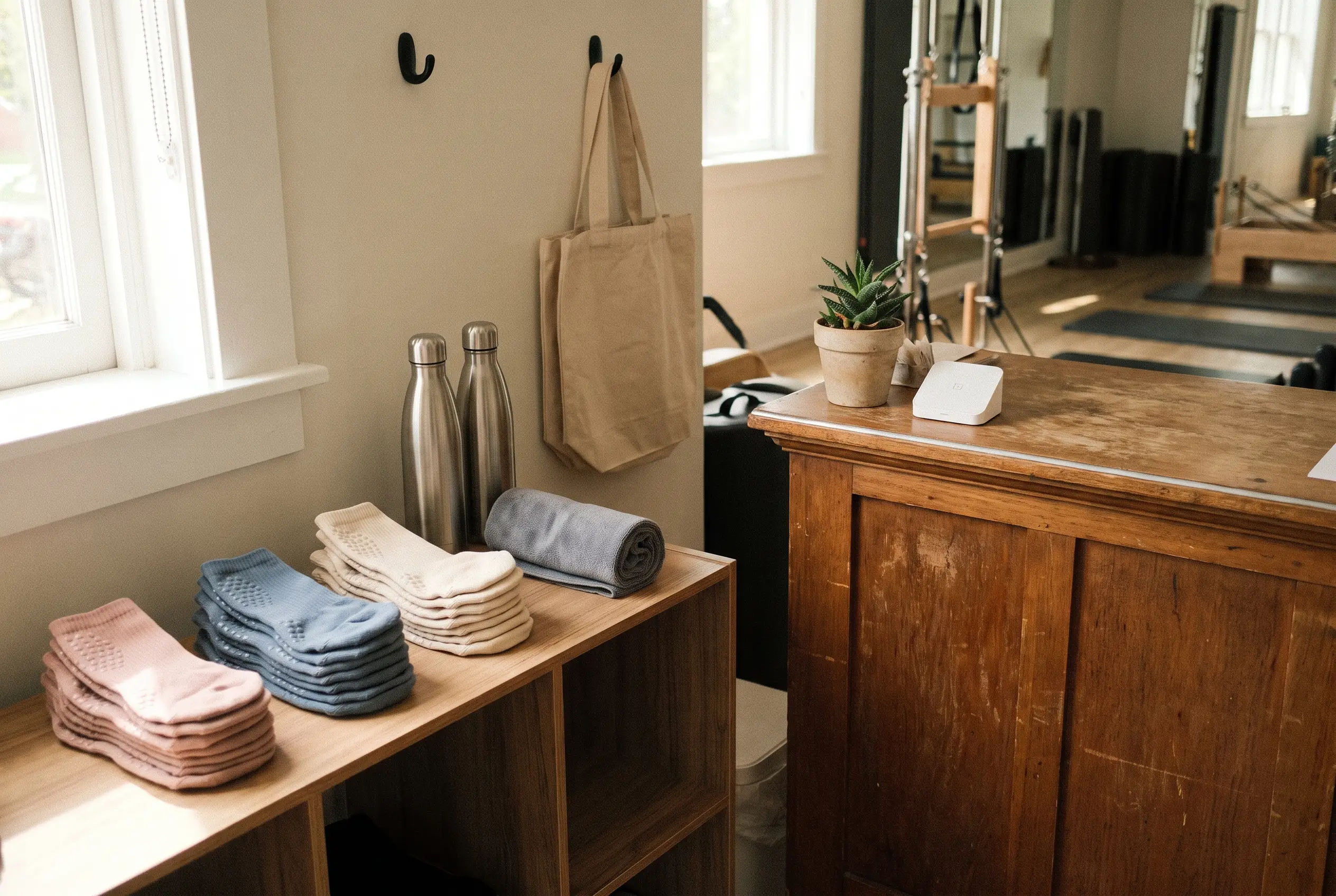
- Make the product easy to buy at full price. Front-desk placement, clear display near check-in, and simple signage all help members decide quickly without needing a promotion.
- Use staff and instructors well. When instructors wear the sock and front-desk staff have an easy prompt for first-timers or forgetful members, sell-through improves without discounting.
- Track best sellers and slow movers early. If one size, color, or style consistently wins, reorder that line first instead of spreading the budget evenly across everything.
- Reorder before you run out. Stockouts kill momentum, while oversized back stock pressures you into markdowns. The healthiest margin often comes from smaller, cleaner repeats.
- Use limited drops carefully. A seasonal or special design can keep retail fresh, but only if quantities stay sensible and you avoid building a pile of leftover styles.