 4.8 OUT OF 5
 Jesse Enkelaar
For a single studio, a specialist supplier is usually cheaper than Alibaba once you include the true landed cost and the risk, even though the Alibaba listing looks lower. Alibaba tends to win only at real volume, roughly above 1,000 pairs of one design, and only when you have your own design files, a quality-control process and the cash to carry stock and risk yourself.
Alibaba is the default place studio owners go to price-check grip socks, so it is worth knowing what you are actually looking at there, why its low prices so often disappear when you ask for a real quote, and which costs move from the supplier to you when you buy that way.
This article compares the two routes from the point of view of a studio ordering in the dozens or low hundreds of pairs. If you are a multi-location group ordering in bulk, the section on when Alibaba wins is the one to read closely.
What Alibaba actually is
Alibaba is a marketplace, not a supplier. It lists thousands of factories and trading companies that compete for attention on price. A few things follow from that:
- The listed price is a teaser. It usually applies to a high quantity of a standard product, and the real quote only arrives after you message the seller with your specifications.
- Many sellers are not factories. A large share of listings come from trading companies that buy from a factory and add their margin.
- Badges are not guarantees. Supplier badges tell you the seller pays for a membership or has had its company checked, not how your specific order will turn out.
- Every seller is different. Two listings with identical photos can come from very different operations, with very different standards.
So the number you see first is rarely the number you would pay, and the seller you talk to is not always the one making your socks.
The trader-versus-factory trap
A trading company is not automatically bad. A good one handles communication, follows up with the factory and sometimes checks quality. The trap is that you pay a middleman while believing you have cut out the middleman, and you often cannot see which factory is actually producing your order.
Telling a real factory from a trader takes experience. Usual checks include:
- Business licence. Check whether the registered business scope includes manufacturing or only trading.
- Production site. Ask for the address of the factory and a live video call from the production floor, not just showroom photos.
- Consistency. Check whether the company name on the licence, the bank account and the invoice match.
- Samples. Look at whether samples are made to your specification or pulled from generic stock.
A specialist supplier is also an intermediary, but a transparent one. The design work, low minimums, quality control and delivered pricing are part of the deal you can see, rather than a hidden markup on a large order placed blind.
Why the low price rarely survives a studio-size order
The low listing price assumes thousands of pairs. Ask for 100 pairs of one design with your logo and the per-pair price jumps, sometimes above what a specialist charges, because you no longer qualify for the volume that made the listing cheap. Custom work adds to it: putting your studio logo on the grip when ordering direct usually means a separate setup or mould charge and a higher factory minimum.
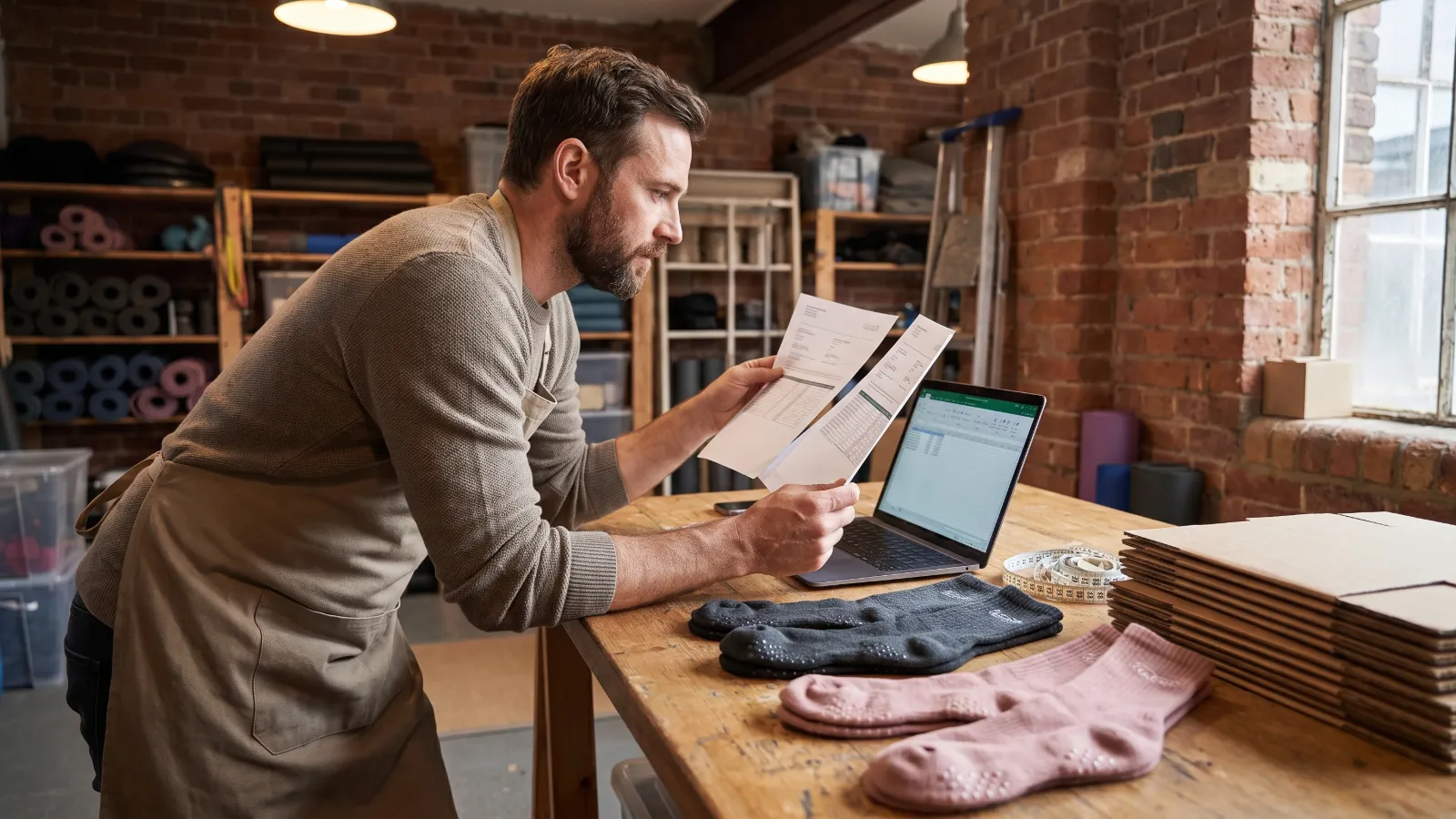
Then the landed costs arrive on top of that higher price: samples, freight, import duty, import VAT and clearance fees. We worked through those line by line, with an example per pair, in our breakdown of what it really costs to import custom socks from China. The short version is that a listing under two euros or pounds per pair can land near four. At that point you are paying close to specialist prices while running the whole import yourself.
Who carries the risk on each route
On Alibaba, unless you pay extra for third-party inspection and use the platform's payment protection, the following risks sit with you:
- Sample approval. You decide whether the sample is right, and a sample that looks fine on camera can still differ from what you expected.
- Production quality. Grip that peels, colours that drift from the sample or sizes that run small are discovered when the box is opened in your studio.
- Quantity. A short count means fewer sellable pairs at the same total cost.
- Timing. Delays in production, freight or customs land on your launch date.
- Import. You are the importer of record, with the duty, VAT and paperwork that come with it.
Payment protection can help you recover money in a dispute, but it does not give you back the weeks lost or a studio launch without socks. Our article on the risks of ordering grip socks direct from China goes deeper into how these go wrong and how to limit them. When you price the two routes honestly, you are not comparing socks with socks. You are comparing socks plus a project you run yourself with socks delivered, checked and ready to sell.
When Alibaba actually wins
Alibaba, or ordering direct from a factory in general, genuinely wins when all of the following are true:
- Volume. You order at real volume, above roughly 1,000 pairs of a single design, so the low price tier actually applies and the fixed costs spread thin.
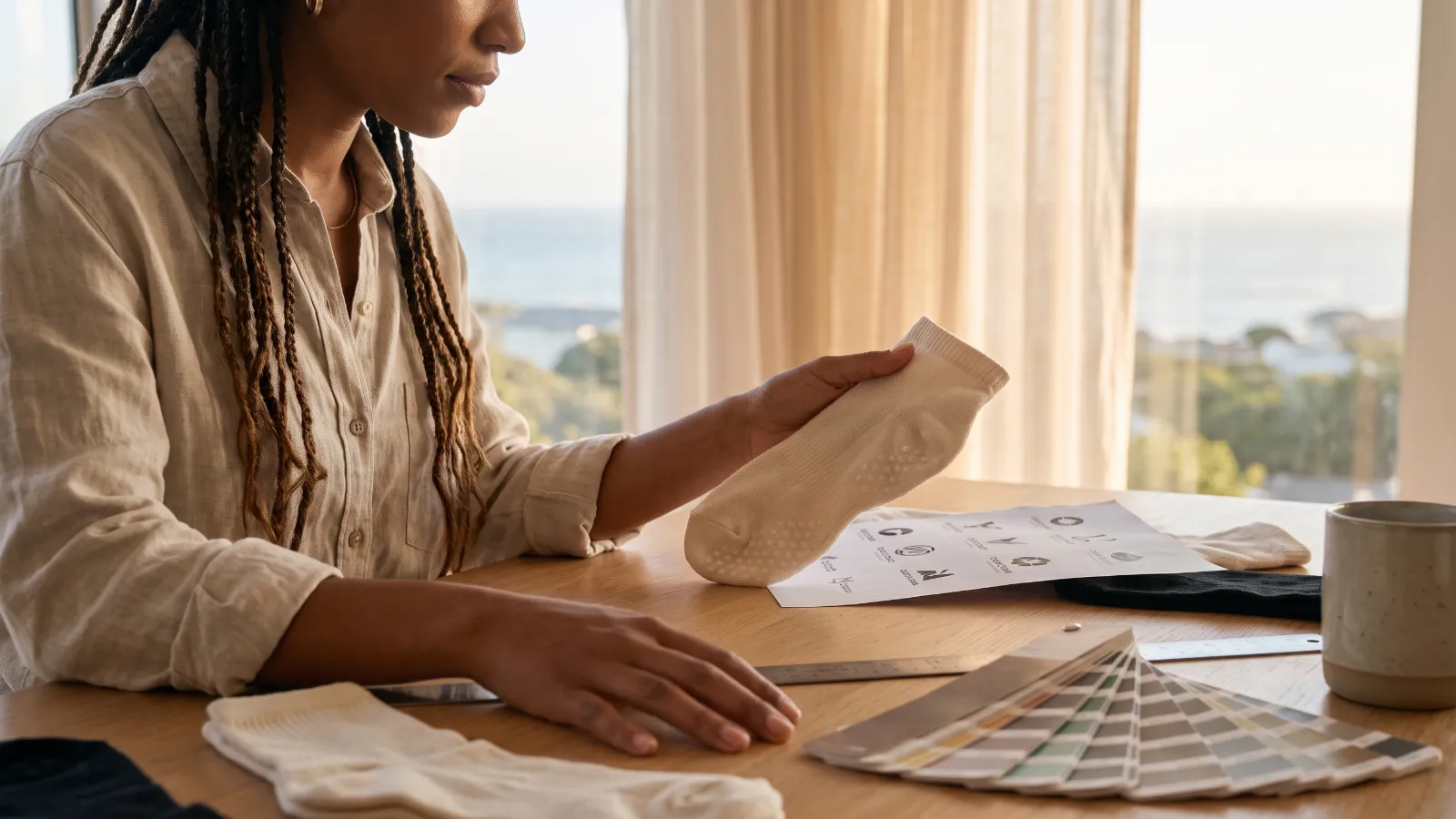
- Design files. You have production-ready artwork and a clear technical specification, so the factory does not have to interpret anything.
- Quality control. You have a process, or a paid inspection partner, to check the goods before they leave the factory.
- Cash flow and time. You can pay up front, hold the stock and spend the hours managing the order.
That describes a multi-location group or a sock brand ordering in bulk, not a single studio buying its first branded sock. For a closer look at the tipping point, see when it makes sense to order grip socks direct from China.
Side by side for a single studio
| Factor | Alibaba (single studio) | Specialist supplier (PilatesGoods) |
|---|---|---|
| Headline price | Lowest on paper | Higher on paper, but delivered |
| Price at studio-size quantity | Jumps sharply below the listing quantity | Built for small runs, from 50 pairs |
| Logo on the grip | Possible, with setup costs and higher minimums | From 100 pairs per colour |
| Design help | You supply production-ready files | Free mockup within 48 hours on working days |
| Quality control | Yours to arrange and pay for | Quality checks included |
| Shipping, duty and import | Yours to manage as importer | Included, import duties paid by PilatesGoods |
| Quantity delivered | Depends on the seller | Exact quantities |
| Best for | 1,000+ pairs, in-house operations | First orders and small to mid-size runs |
How to make the call for your studio
Compare delivered cost and risk, not listing prices. A practical way to do that:
- Write down your real quantity per design and colour, and whether you want the logo on the sole or only on the cuff.
- Ask two or three Alibaba sellers for a quote at that quantity, and ask each one directly whether they are the factory.
- Add samples, freight, duty, VAT and fees to each quote so you have a landed cost per pair.
- Ask a specialist for a delivered price at the same quantity and specification.
- Weigh the difference against the time and risk you would take on.
For a studio ordering in the dozens or low hundreds, the specialist route usually wins on both cost and risk. For genuine bulk, Alibaba can be cheaper if you have the capacity to run the import yourself. If you want to see what custom socks with your logo would look like before comparing quotes, you can start your design with a free mockup, with no obligation.