 5.0 out of 5
 Jesse Enkelaar
You do not need a full shop wall to launch studio retail well. A small, useful range is usually enough to test demand, especially if it starts with grip socks and a few class-ready accessories your clients already use.
Most retail launch mistakes happen before anything reaches the shelf: too many products, unrealistic lead times, unclear pricing, or no restock plan. This guide walks through the decisions studio owners usually need to make, from which yoga and Pilates accessories sell most to pricing and restocking, with a retail focus rather than a general studio-opening checklist.
Pick the opening range your clients will actually use
| Decision area | Best opening approach | Why it matters |
|---|---|---|
| Client need | Start with products people already use in or around class, such as grip socks and one or two small accessories. | Useful items feel natural and sell more easily than random merch. |
| Studio context | Match the range to your client type, class format, and buying moments. | The offer should feel like part of the studio experience, not a separate side business. |
| Quality and materials | Check feel, fit, finish, and material choices before placing your main order. | These shape perceived value, repeat purchase, and how well the product represents your brand. |
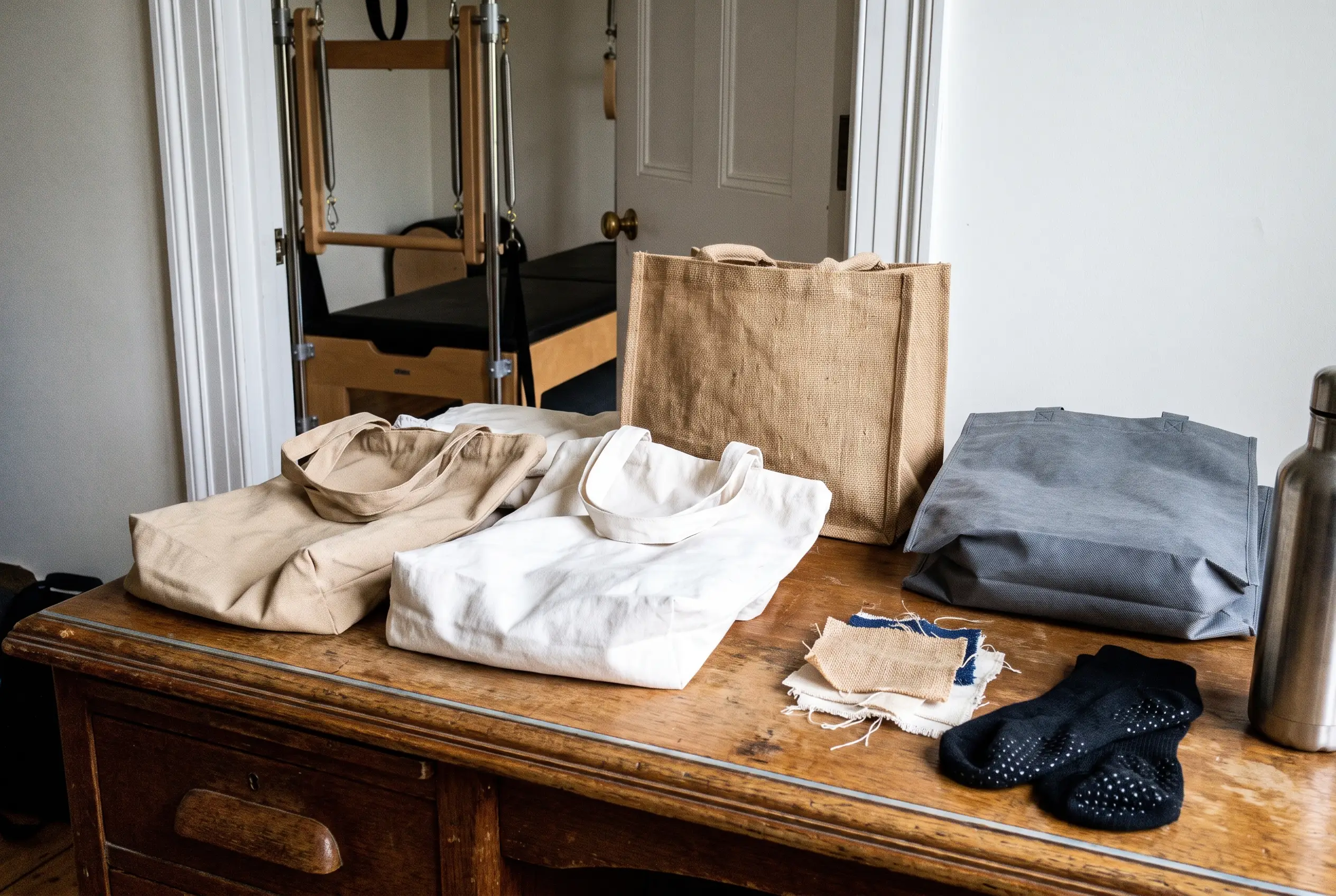
| Branding priority | Custom-brand your clearest best-sellers first and keep the opening range tight. | You learn faster, spend less, and expand with more confidence later. |
Use this pre-launch checklist before you buy stock
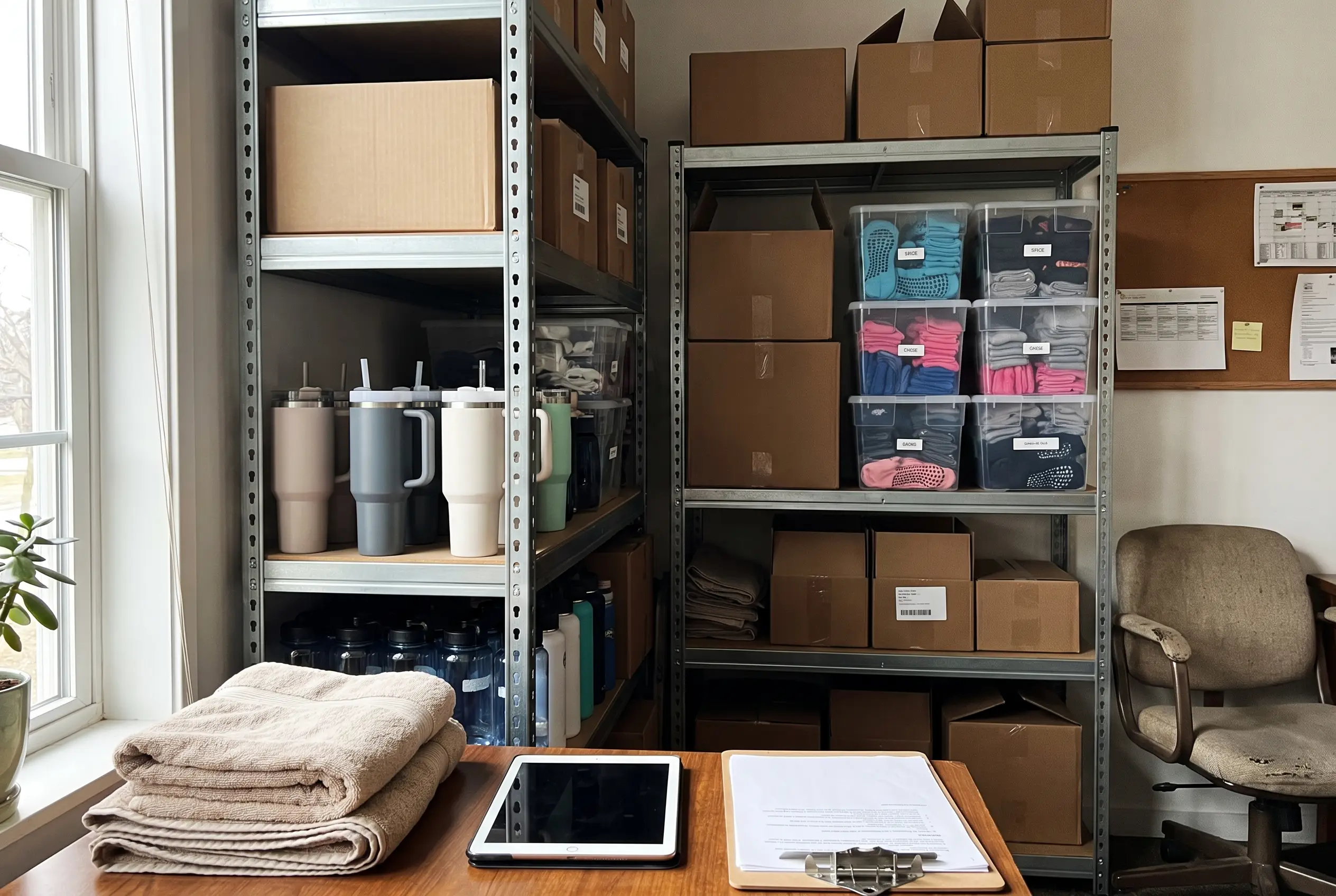
- Set your launch date first, then work backwards for sourcing, sampling or mockups, brand approval, delivery, display setup, team prep, and promotion.
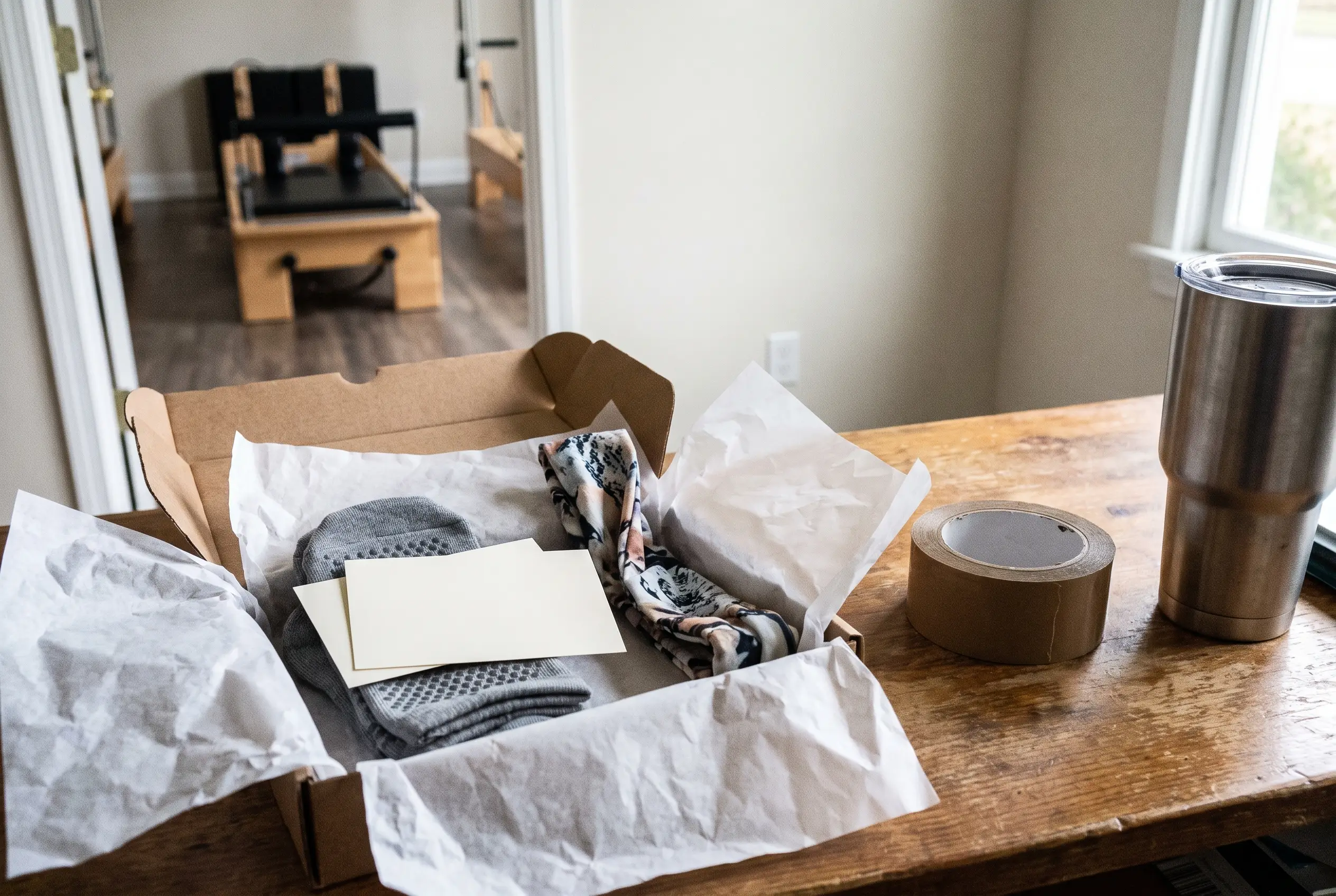
- Build extra time into the plan for custom grip socks or branded accessories, since custom grip sock lead times and freight are often the real bottleneck.
- If you are ordering custom socks from PilatesGoods, standard custom orders start at 50 pairs and typically fall within an approximate 4-8 week production and delivery window, so avoid last-minute launch dates.
- Decide early which products must be in hand for day one and which can move to phase two, an online drop, or a preorder.
- Keep supply, setup, marketing, and operating tasks in one checklist so nothing gets split across teams and missed.
Price for margin and keep the first order lean
Low minimums help here. For example, PilatesGoods starts standard custom sock orders at 50 pairs, which makes it easier to test demand without placing an oversized first buy.
| Pricing or buying decision | How to handle it |
|---|---|
| Landed cost | Base retail price on the full landed cost, not unit cost alone. Include shipping, duties or VAT, packaging, payment fees, and any sample or setup costs. |
| Opening quantities | Keep your first order narrow on sizes, colours, and styles so cash does not get trapped in slow stock. |
| Bundles | Use simple pairings only where they help conversion, such as socks with a towel or bottle, while protecting margin on best-sellers. |
| Business role | Treat retail as an extra revenue stream that lifts average client spend, not as the only driver of studio profitability. |
Set up a tiny shop that feels natural in the studio
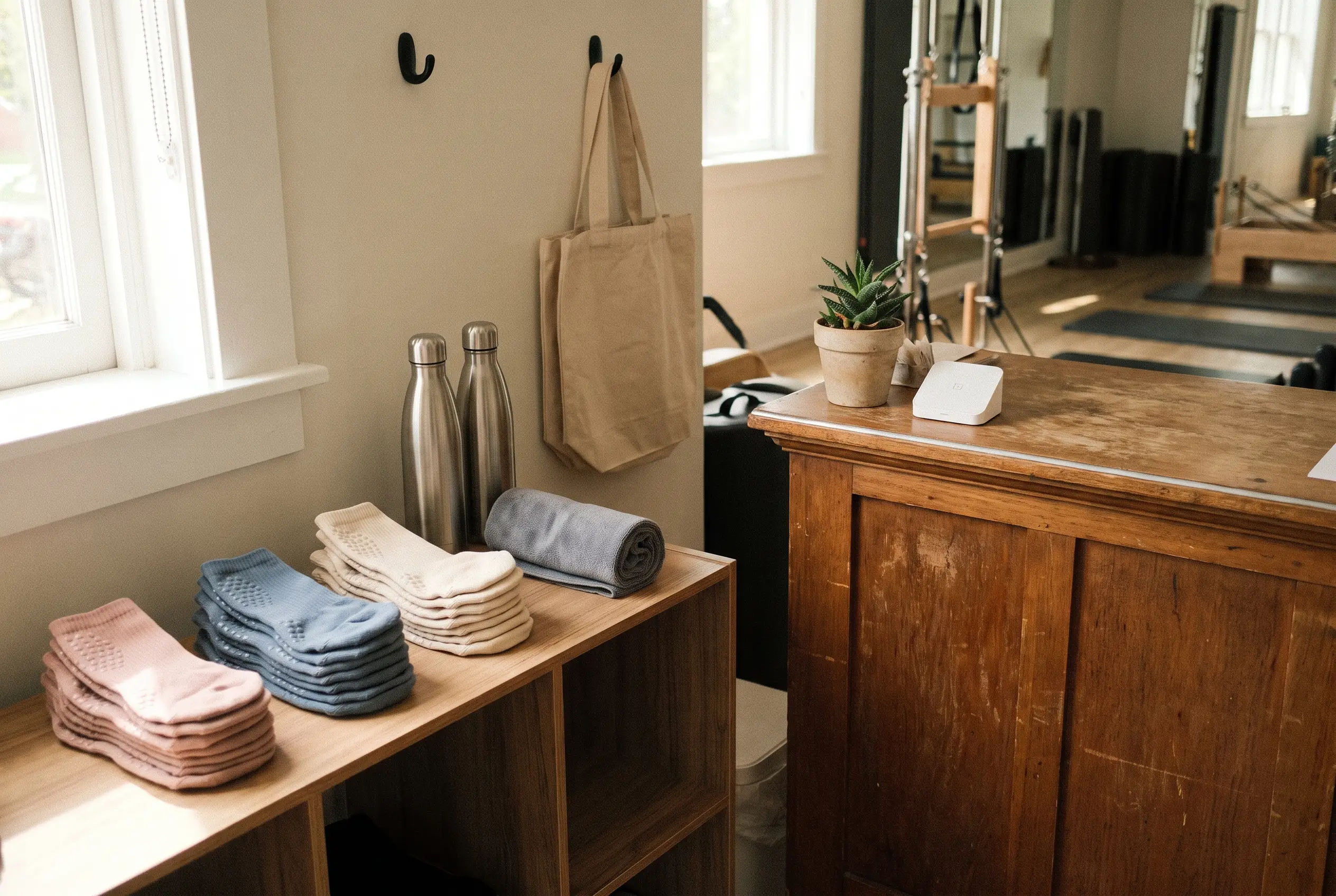
Your first retail setup can be small. A shelf at reception, a countertop display, or a neat waiting-area table is often enough. The key is placement: put Pilates products where clients already pause so browsing feels convenient, not forced.
Keep the display clean, easy to touch, and visually in line with the studio. A simple “you may need this for class” or “shop what you just used” approach usually works better than trying to create a full store on day one. Plan hidden back-stock storage too, so you can refill quickly without making the front of house feel cluttered.
Make checkout, stock rules, and staff talking points easy
The smoother the process, the more natural retail feels for both staff and clients.
- Test the full payment flow before launch, including in-person checkout, stock tracking, receipts, and any online or click-and-collect option you plan to offer.
- Set simple rules for exchanges, hygiene-sensitive items, damaged stock, and who handles end-of-day stock checks.
- Give instructors and front-desk staff short talking points focused on fit, use, and client need rather than hard selling.
- Choose the moments when products should be mentioned naturally, such as new-client onboarding, after class, or when someone forgot an essential item.
Launch it like a mini campaign, not a quiet shelf
- Build anticipation before launch with teaser posts, behind-the-scenes setup, product previews, and a clear date clients can act on.
- Use your website, email, social channels, and any local partnership activity around one simple retail message or opening offer.
- Show products in real studio context through instructors, class use, or welcome bundles so the launch feels useful and credible.
- Give people an easy reason to buy now, such as a limited first run or a class-ready pairing.
- Keep promoting after week one with reminders, staff picks, seasonal drops, or small limited runs instead of treating launch day as the finish line.
Watch the first 30 days and reorder with proof
| What to track | What it tells you | What to do next |
|---|---|---|
| Sell-through by SKU, size, and colour | Which exact combinations are moving | Reorder proven winners fast and cut weak variants early |
| Revenue per client and attach rate | Whether retail is lifting average spend | Adjust display, pricing, or staff timing if take-up is low |
| Repeat purchase | Whether products feel useful enough to buy again | Deepen strong categories before adding new ones |
| Sales moments and staff feedback | Which classes, prompts, or situations drive purchases | Refine the range and plan the next buy with real evidence |
Treat the first launch as a live test. Once you know what works, you can make better decisions about when to start your design, broader accessories, or an online extension.
Quick answers studio owners usually need
These are some of the questions that often come up when studio owners start planning retail alongside the wider business.
What are the 39 steps of the product launch checklist?
There is no universal 39-step checklist every studio has to follow. For studio retail, it is usually easier to work in clear phases: choose the offer, source it, price it, set up the display and checkout, launch it, and measure what sells. Add more steps only when the launch gets more complex, such as when you add studio logo grip socks, international shipping, or an online store alongside the in-studio offer.
Is opening a Pilates studio profitable?
It can be, but profitability starts with the core studio model: occupancy, pricing, payroll, rent, and retention. Retail can improve the picture by raising average client spend, especially when the products are relevant and margins are healthy. Overbuying, weak pricing, and heavy discounting can erase that benefit quickly.
Can you make 100k as a Pilates instructor?
It can be possible, but usually through a mix of revenue streams rather than classes alone. That may include group sessions, privates, workshops, teacher training, and sometimes product sales. Retail is best viewed as a supporting income layer that increases value per client, not as a replacement for a strong teaching business.
What is the 10/20/30 rule in Pilates?
That is not a standard retail-launch rule. It may refer to teaching language used in a specific Pilates context rather than business planning. For a retail launch, focus on the basics that actually affect results: product fit, lead time, margin, display, and restocking. If your studio uses method-specific terms, explain them separately so the buying journey stays clear.