 5.0 out of 5
 Jesse Enkelaar
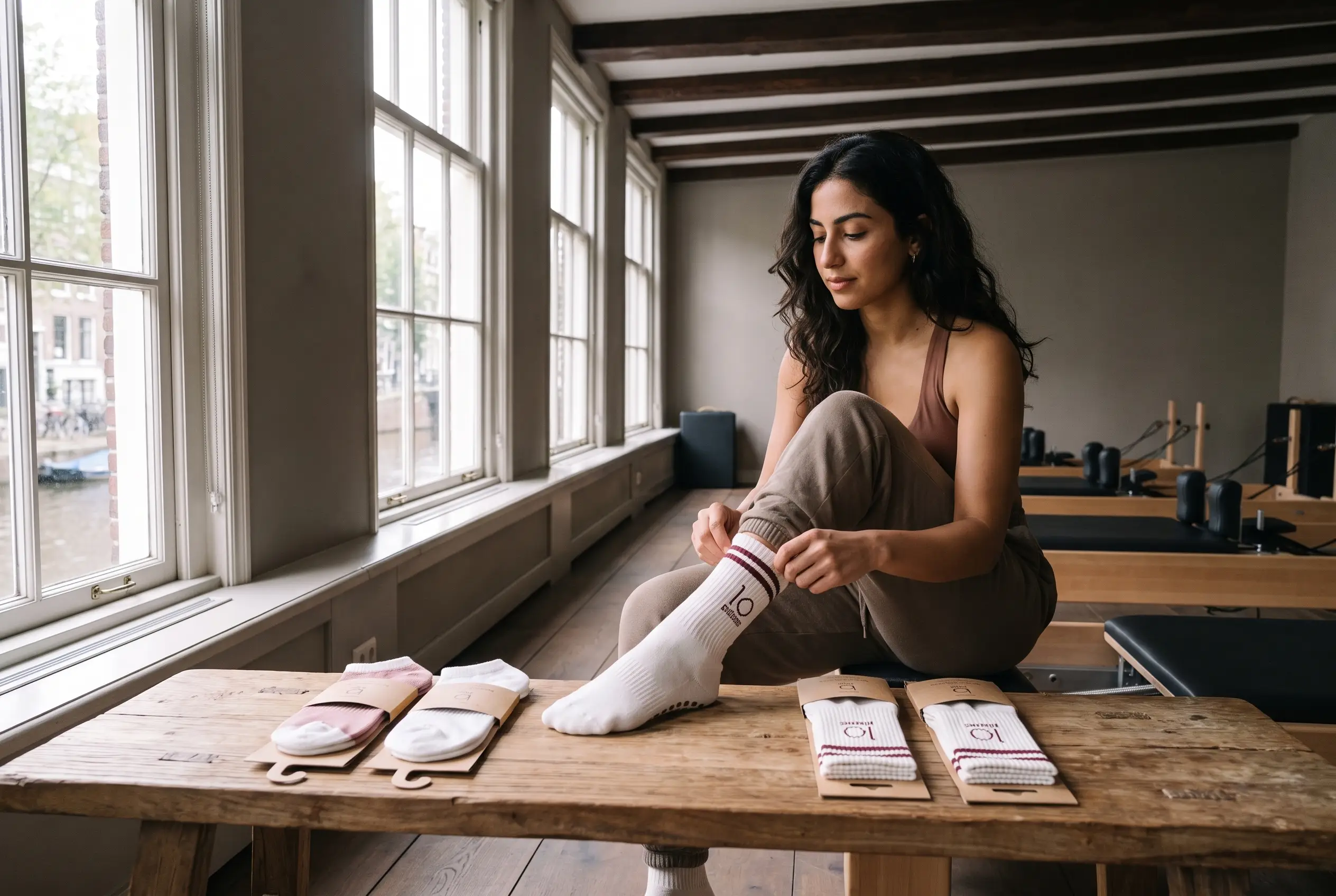
Private label and custom branded socks are not the same buying route. In most cases, private label means building a sock line under your own brand, with more say over the product, packaging, and assortment. Custom branded socks usually mean starting with a proven base style and adding your brand through logo placement, colour direction, grip messaging, or simple packaging touches.
For studios and smaller brands, the right choice usually comes down to five things: how much control you need, how large the opening order can be, how fast you want to launch, how complex the packaging needs to be, and whether you are testing one product or building a repeat retail line. If you are starting with branded grip socks for a studio, the lighter custom route is often the simpler first step.
The choice really comes down to how much of the product you want to own
The difference is not just whether your logo appears on the sock. It is about how much of the product you want to define. A custom branded order usually builds on an existing base style that is already proven. Private label goes further, with more decisions on the sock, the packaging, and the wider line.
That extra control can be valuable, but it also brings more approvals, more moving parts, a larger commitment, and more exposure to quality problems when ordering grip socks direct from a factory. The right route depends on your launch stage, your confidence in demand, and whether you need a full retail system or a simpler branded sock order.
Private label and custom branded socks, side by side
| Area | Custom branded socks | Private label socks |
|---|---|---|
| Product ownership | Branding applied to a proven base style | More brand-owned product line |
| Design and spec control | Lighter changes, fewer technical decisions | More say over fit, materials, grip, and pack |
| Branding scope | Logo, colours, grip wording, simple packaging | Sock, labels, packaging, and assortment built together |
| Minimum order pressure | Usually lower and easier to test | Usually higher because more is being customised |
| Lead-time and approvals | Faster, with fewer rounds to sign off | More approval steps and timeline pressure |
| Best fit | Studio merch, event socks, first test runs | Repeat retail lines and broader assortment plans |
Custom branded socks are usually the easier first step
For many studios and smaller brands, this route works well because:
- It suits demand testing in a studio shop, event drop, retreat, or pop-up.
- It often starts with a proven base style, then adds brand touches such as adding your studio logo to grip socks, colour direction, grip wording, or simple packaging, depending on supplier capability.
- Fewer moving parts usually mean easier approvals and less inventory risk.
- At PilatesGoods, standard custom sock minimums start at 50 pairs, which helps make first runs more manageable.
Private label makes more sense when you're building a real line
Private label becomes more relevant when the goal is a structured retail range, not just branded merch. It is often a better fit when:
- You want more say over sock specification, materials, fit, grip layout, labels, and packaging.
- You are planning repeat orders, multiple SKUs, and a tighter size-and-colour structure.
- You are ready for more approval rounds across samples, labels, packs, and assortment planning.
- The payoff is stronger differentiation and a line that can scale more cleanly over time.
What usually changes price, MOQ, and timing
Both minimum order quantities for custom grip socks and timelines move with the brief. A branded base style and a fuller private-label project should not be priced or planned as if they are the same order type.
- Quantity has to work per style, size, and colour, not only as one total pair count.
- Materials, grip application, packaging layers, and sample rounds can all add cost and time.
- More approvals usually mean more pressure on lead times for custom grip socks before production starts.
- Shipping method and whether goods arrive bulk-packed or retail-ready also affect the launch schedule.
What to decide before you ask for quotes
Even a rough brief can be useful if your priorities are clear. Suppliers can guide you faster when they know what is fixed, what is flexible, and what the product is meant to do commercially.
- Start with the use case: studio merch, retail shelf, event product, corporate gift, or the start of a wider sock line.
- Define the sock type and who it is for, so the product direction is clear from the start.
- Share expected quantity, size split, and number of colours, since these affect feasibility quickly.
- List branding points and packaging needs, even if some details are still open.
- Give a realistic launch date, especially if the order is tied to an event or opening.
- Keep the first assortment narrow. If you are still exploring direction, PilatesGoods offers free custom mockups for standard custom sock projects, which can help you test the concept before production.
Questions people usually ask before starting
These are the questions that tend to come up once buyers move from browsing to requesting quotes. The terms sound similar, but the differences affect minimums, packaging choices, and how much product work sits on your side.
A supplier that says “custom” may mean anything from a logo update to a more developed branded programme, so it helps to pin down what is actually included.
Private label vs branded: what is the difference?
“Branded” usually tells you whose identity appears on the product. It does not automatically tell you how customised the underlying sock is. “Private label” normally means the socks are produced for sale under your brand, with more ownership over the product and packaging scope. Because suppliers often use the terms loosely, ask exactly what can be changed on the sock, on the packaging, and across the order structure.
What is the difference between an own brand and a private label product?
Your own brand is the name customers buy from. A private label product is one sourcing or manufacturing route used to supply that brand. In practice, an own-brand sock range might include private-label products, more bespoke developments, or simpler custom branded versions of existing styles. The brand is the customer-facing identity; private label describes how a product is made for that identity.
Is the socks business profitable?
It can be, but profitability depends on the niche, repeat demand, and whether the product is differentiated enough to avoid competing only on price. For studios, branded socks often work best as part of a wider retail offer because they can add a practical purchase and lift basket value. The risk is overbuilding too early: more customisation may improve distinctiveness, but it also increases inventory and cash-flow exposure.
What is the best custom sock company?
There is no single best supplier for every brief. The right partner depends on whether you need a small branded run or a fuller private-label development process. Look for relevant product experience, sample quality, clear minimums, suitable branding and packaging options, and realistic lead-time communication. For studios starting with custom-branded grip socks and a manageable opening run, PilatesGoods is geared to that simpler first-step model if you are ready to start your design.