 5.0 out of 5
 Jesse Enkelaar
Studio retail works best when it solves a real client need and creates margin at the same time. A shelf of random products rarely does either. The studios that see steady results usually keep things simple: a tight assortment, easy-to-shop displays, light promotion, and disciplined reordering. You do not need a big shop setup. You need a repeatable system that makes buying easy and stock decisions easier.
What makes studio retail actually profitable
Retail can do two jobs at once: diversify revenue and make the client experience more convenient. When members can pick up the essentials they use before, during, or after class, your studio feels more complete and easier to return to.
But profitability depends on more than choosing attractive products. Stock risk, pricing, display quality, staff habits, and reporting all shape the result. In most studios, a focused retail plan beats a large unfocused assortment. A small group of well-chosen Pilates and yoga products is easier to explain, easier to restock, and far less likely to become dead stock. That is why strong retail should be treated as an ongoing part of operations, not a one-time merchandising project.
Stock less, but stock the right things
- Start with best-selling yoga and Pilates accessories that fit what clients already do in class, or regularly need before and after class.
- Prioritise usefulness, quality, repeat-purchase potential, and brand fit over carrying too many SKUs.
- Use staff observations and client feedback to spot what people ask for, forget, replace, or buy again.
- Review sales patterns often so you know what to add, rotate, reorder, or remove.
- For many studios, compact essentials like grip socks and small accessories are easier to test, store, and replenish than bulky inventory.
- That is one reason many studios start branded retail with studio-logo grip socks and other compact accessories. PilatesGoods specialises in those studio-friendly categories.
Create easy reasons to buy without sounding salesy
- Build retail into natural studio moments such as first visits, membership upgrades, workshops, challenges, and gift seasons.
- Use simple bundles to make buying easier, like pairing one class essential with one branded add-on.
- Try limited runs or exclusive drops to create interest without teaching clients to wait for discounts.
- Help staff make specific recommendations based on what clients already buy, ask for, or forget to bring.
- Promote new arrivals through the channels clients already use with your studio, including email, booking updates, front desk signage, and social posts.
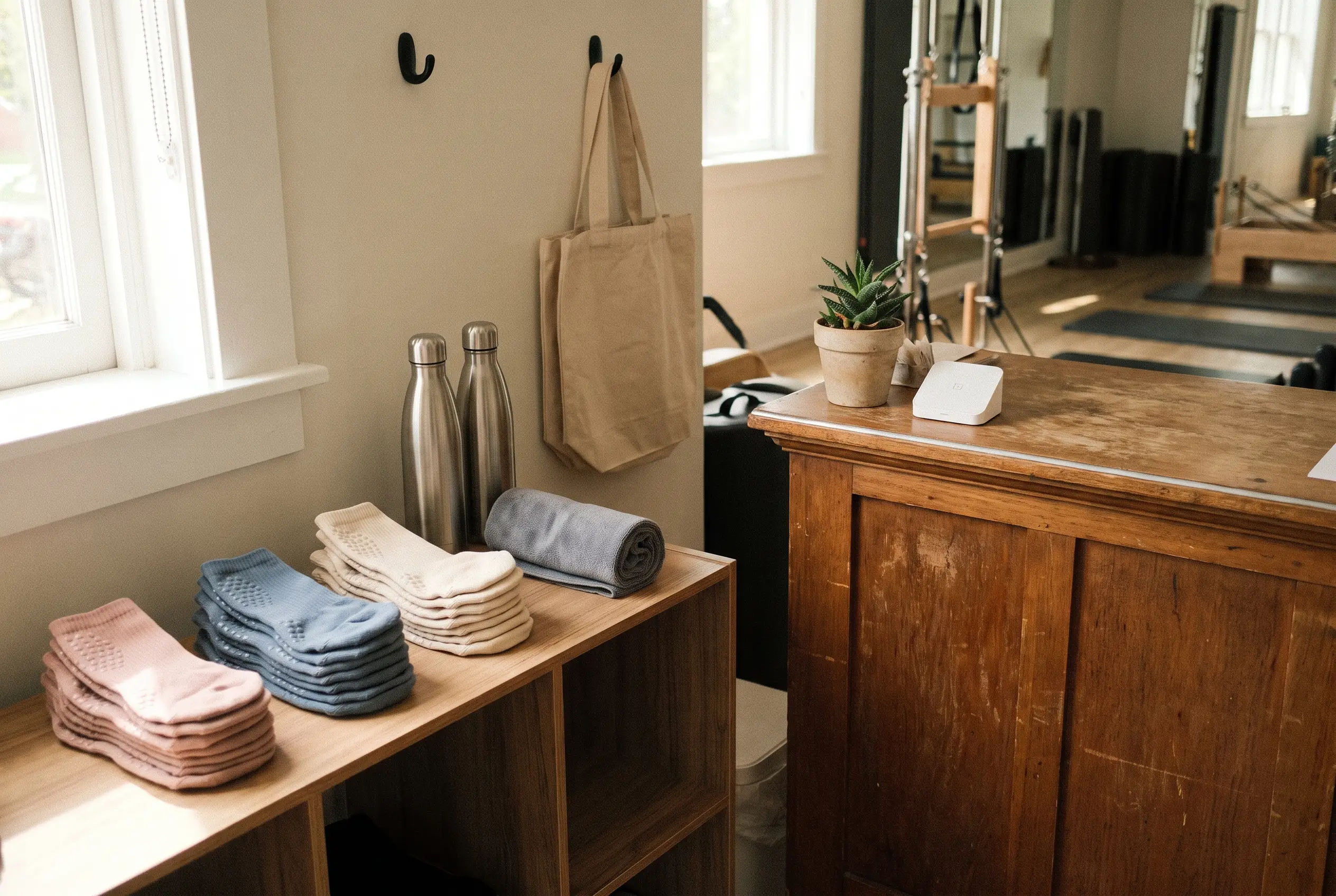
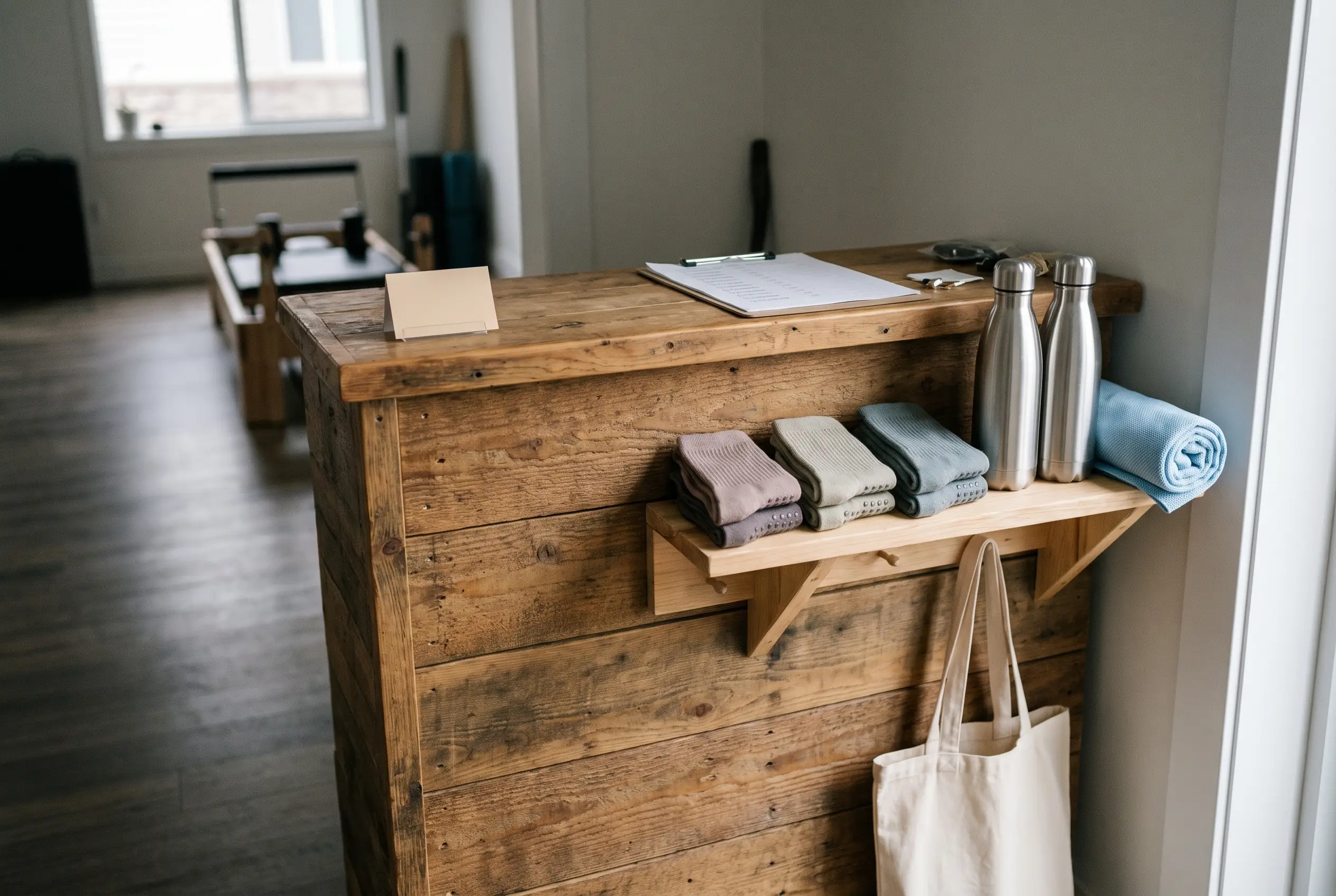
Make even a small front desk display work harder
- Place retail where clients naturally pause, such as reception, check-in, the water station, or the exit after class.
- Make browsing quick with visible prices, clear sizing, and simple groupings that help people compare items fast.
- Use vertical space, shelves, hooks, or one clean tabletop display instead of overcrowding a small area.
- Lead with a curated hero selection rather than your full inventory. Bestsellers and everyday essentials should be the easiest products to spot.
- If an item needs context, add a short sign that answers the basics right away: what it is, who it is for, and why it is useful.
- Keep the look consistent with your studio brand, then refresh displays with seasonal rotations, workshop tie-ins, or new drops so repeat clients notice what is new.
- Make fast-moving items easy to grab, easy to understand, and easy for staff to restock between classes.
Track the numbers that tell you what to reorder
You do not need complicated reporting. A short weekly or fortnightly SKU review is enough if you track the same numbers every time.
| Metric | What it tells you | What to do |
|---|---|---|
| Sell-through | How much of received stock is actually moving | Reorder winners before size or colour gaps appear |
| Units sold | True volume by SKU | Separate dependable staples from one-off curiosity buys |
| Margin | Which items contribute real profit | Protect space for strong full-price performers |
| Stock on hand | Your current exposure | Bundle, mark down, or pause slow movers early |
| Reorder timing | When you need to buy again | Plan around lead times and seasonal demand |
If you plan to explore custom product design, build in supplier lead time too. PilatesGoods lists an approximate 4-8 week production and delivery window for custom orders.
Quick answers to common studio retail questions
These frameworks sound abstract, but they become useful once you turn them into a few clear studio decisions.
What are the 5 P's of retail?
The 5 P's of retail are product, price, place, promotion, and people. In a studio, that means what you stock, what you charge, where clients see it, how you promote it, and how confidently staff support the sale. If one part is weak, even good products can underperform.
What are the retail strategies?
Core retail strategies include assortment planning, pricing, merchandising, promotions, staff selling, and inventory control. For studios, the right mix depends on client habits, available space, margin, and how easy each product is to replenish. The goal is not more products. It is the right products, managed consistently.
What are the 7 strategies of marketing?
Many people mean the 7 Ps of marketing: product, price, place, promotion, people, process, and physical evidence. In studio retail, the extra two matter because checkout flow, service consistency, display quality, branding, and packaging all shape whether retail feels polished, easy, and worth buying from.
What are the 6 elements of retail strategy?
A simple six-part framework is product mix, pricing, placement, promotion, people, and performance. These elements work together. Good products alone will not fix a weak display, inconsistent staff habits, or poor stock control. Strong studio retail comes from aligning all six, then reviewing results regularly.